

Building WORK-BASED LEARNING PROGRAMS that Last
Throughline Education Partners helps Colorado schools design, launch, and strengthen work-based learning and internship programs. We help build the systems, partnerships, and capacity your team needs to make real-world learning work for more students.
Our services can typically be funded through the Big Three's contracted-support category.
Colorado’s BIG THREE Program
12 college credits
an industry-recognized credential
a high-quality work-based learning experience.
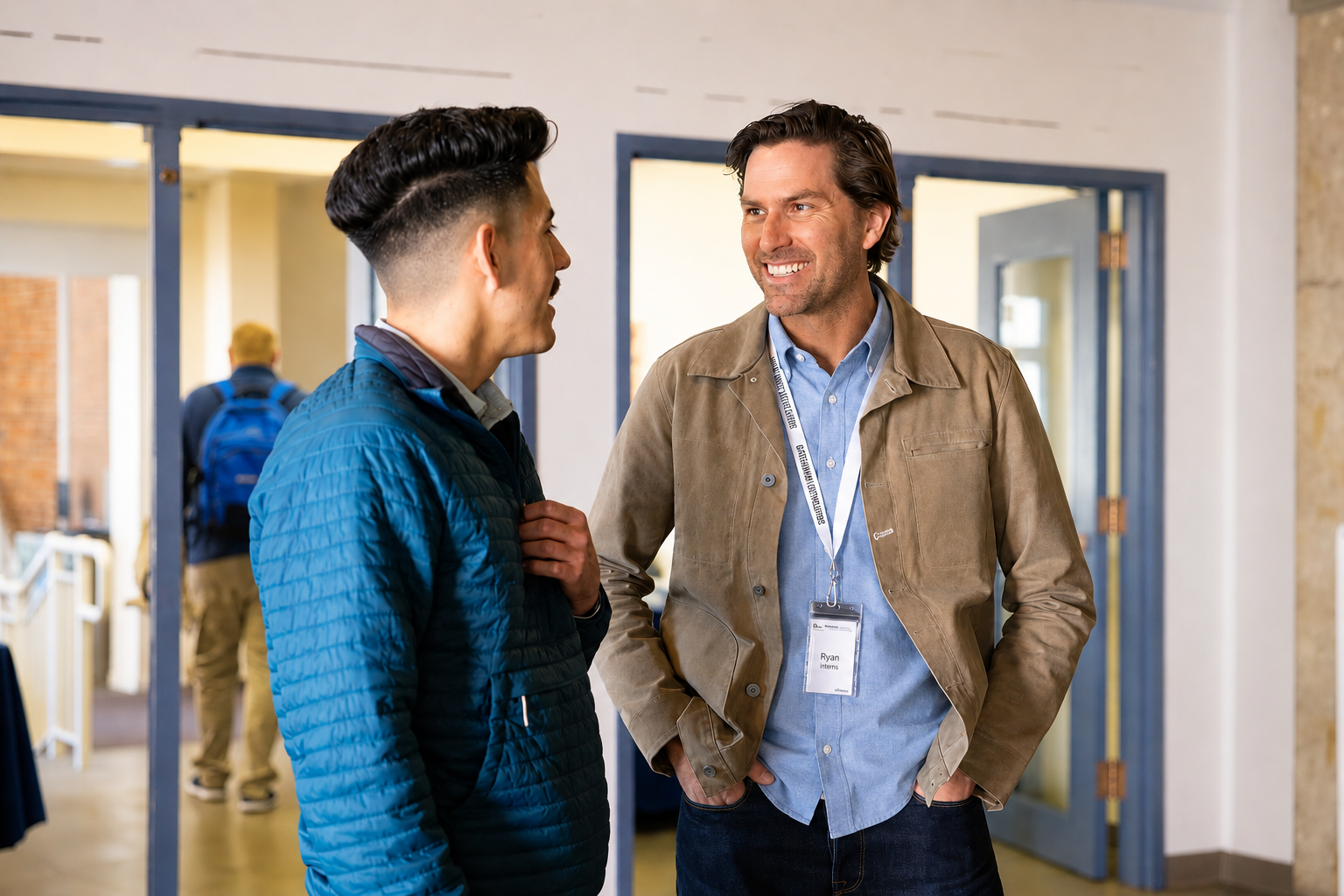
Ryan Plantz is a licensed Colorado teacher and principal, with 13 years of experience in the classroom and 5 years in leadership. He has proven success with developing and operating work-based learning programs in Denver high schools. He created Throughline to help schools turn the Big Three opportunities into funded and functioning work-based learning programs for their high school students.
The state’s funding framework covers a wide range of costs such as program planning and design, professional development, concurrent enrollment expenses, work-based learning expenses, transportation, and marketing to students, families, and businesses.
Colorado's "Big Three" sets a goal for every high school student to graduate ready for a career or further education, with at least one of the following:
Who we work with
Principals and assistant principals
District postsecondary and workforce readiness leaders
College and career readiness directors
CTE and pathway coordinators
Work-based learning and internship coordinators
School counselors
Schools starting a new program or strengthening one that's already running
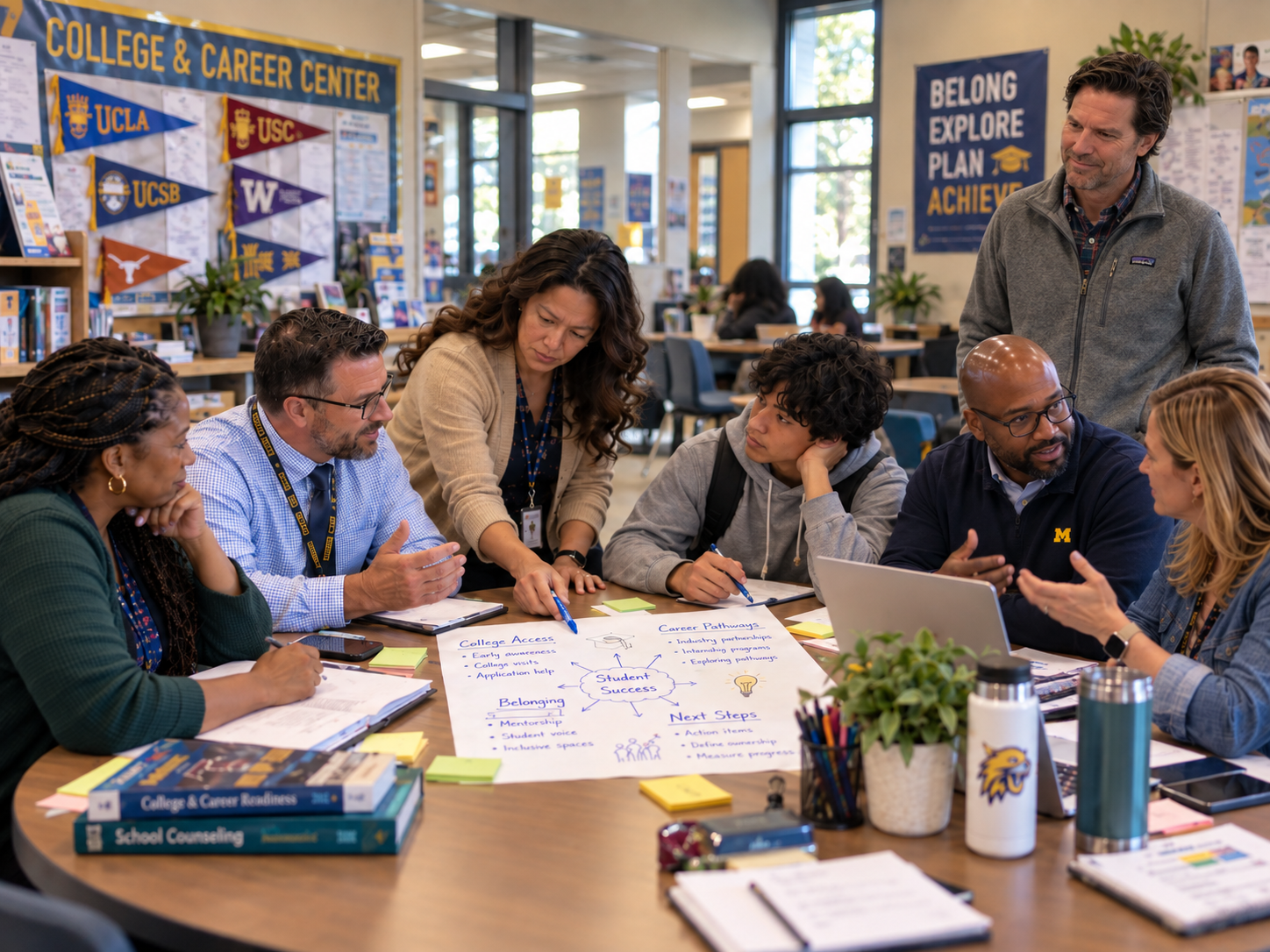
We co-design or tune up your work-based learning program.
Your team runs it. We guide the launch, then stay with you for a full year.
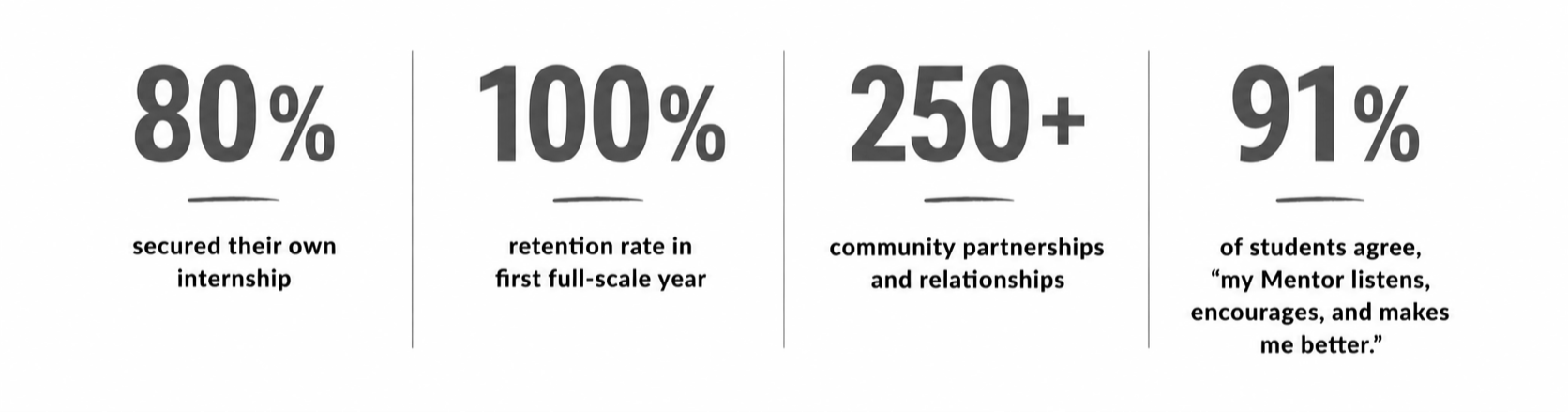
Results from RISE UP COMMUNITY SCHOOL in Denver
"Ryan is an exceptional leader who consistently turns ideas into action and delivers meaningful results. His ability to connect people, programs, and opportunities is unmatched. Ryan has a unique talent for identifying resources and partnerships that others may not even know exist, and he uses those connections to create impactful opportunities for students, educators, and communities."
Lisa Hollingsworth, Internship Coordinator and Work-Based Learning Coordinator
Mapleton Early Career Prep - Thorton, CO

OUR PROCESS
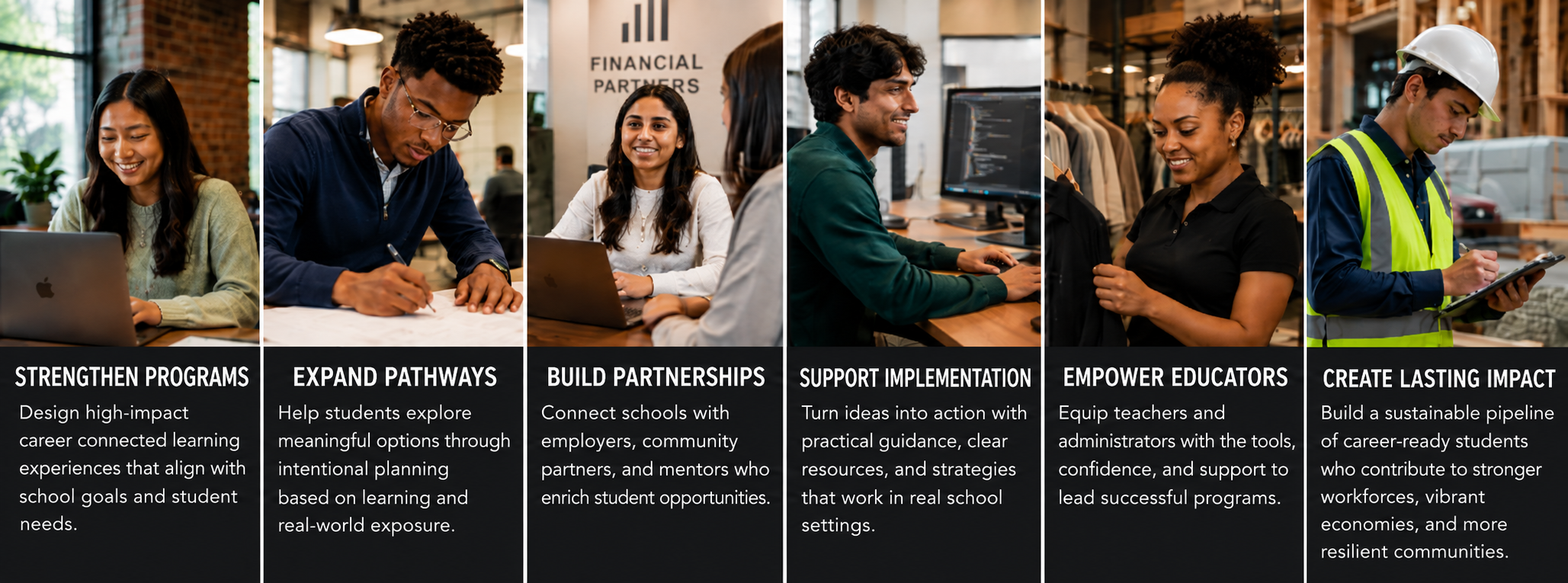
Throughline helps Colorado schools build work-based learning programs: internships, school-based enterprises, job shadowing, and on-the-job training. Whether you need a full program strategy or help with a single process, tool, or plan, every engagement follows the same path.

BUILD
Starting from scratch? For schools without a work-based learning program.
WHAT WE DO TOGETHER | We turn your vision into a clear program model and build the foundational systems your team need to put it into practice.
Together, we define the program, make the key design decisions, build your partnership and outreach approach, develop the tools your team will use, and create a plan for implementation.
WHAT YOU’LL HAVE
A program model built for your school
A WBL Playbook holding the design and key systems
Partnership strategy, outreach process, and agreement templates
Screening criteria, training materials, and student preparation resources
A spring implementation plan, with the calendar, forms, and trackers to run it
TIMELINE | 10–12 weeks · Cohorts for Fall to prepare for a Semester 2 Launch
Five working sessions, ten one-hour coaching calls, and written feedback between sessions.
TUNE-UP
Already have a program? For schools with a a pilot or established work-based learning program already running.
WHAT WE DO TOGETHER | Over 10–12 weeks, we look closely at what you have now to identify what's working, what's missing, and the few changes worth making first.
Together, we analyze your current program, prioritize improvements, document the systems that need to be strengthened, and build a focused plan for the spring.
WHAT YOU’LL HAVE
Improvement priorities, ranked
A WBL Playbook holding what you have and what changes
The program written down rather than remembered
A spring implementation plan
TIMELINE | 10–12 weeks · Cohorts for Fall to prep for a Semester 2 Launch
Five working sessions, ten one-hour coaching calls, and written feedback between sessions.
LAUNCH
Ready to put it into practice?
For schools that have completed BUILD or TUNE.
WHAT WE DO TOGETHER | We stay alongside your team while the program runs for the first time. We watch what actually happens, work through problems with your program lead, and use what you learn to strengthen the program for next year.
WHAT YOU’LL HAVE
A measurement plan set at the start of the spring
Program evaluation, measured against the aim you set
A reporting and reimbursement system, set up and checked before you file
A next-year improvement plan built from what actually happened
TIMELINE | Semester · Cohorts for Fall to prep for a Semester 2 Launch. Five working sessions, one each month, plus three on-site visits and monthly coaching with your program lead.
WHAT WE DO TOGETHER | Launch isn't the finish line. For a full year after your program goes live, Throughline stays on as your resource. We help you put your improvement plan into action, troubleshoot problems as they come up, and keep your program producing the outcomes that matter for your students and your Big Three goals.
WHAT YOU’LL HAVE
Ongoing check-ins, e.g., monthly or quarterly calls
Email support
Support putting your next-year improvement plan into action
A thought partner when staffing, partners, or priorities change
TIMELINE | The full school year following launch
SUSTAIN
Keeping it strong. Included with every engagement.

Need help with something different?
Some schools need support with one piece of their program, like a partnership process, a tracking tool, or an implementation plan. We'll define the scope, deliverables, timeline, and investment together, and your project still follows our Build or Tune-Up, Launch, and Sustain model.
ABOUT RYAN PLANTZ
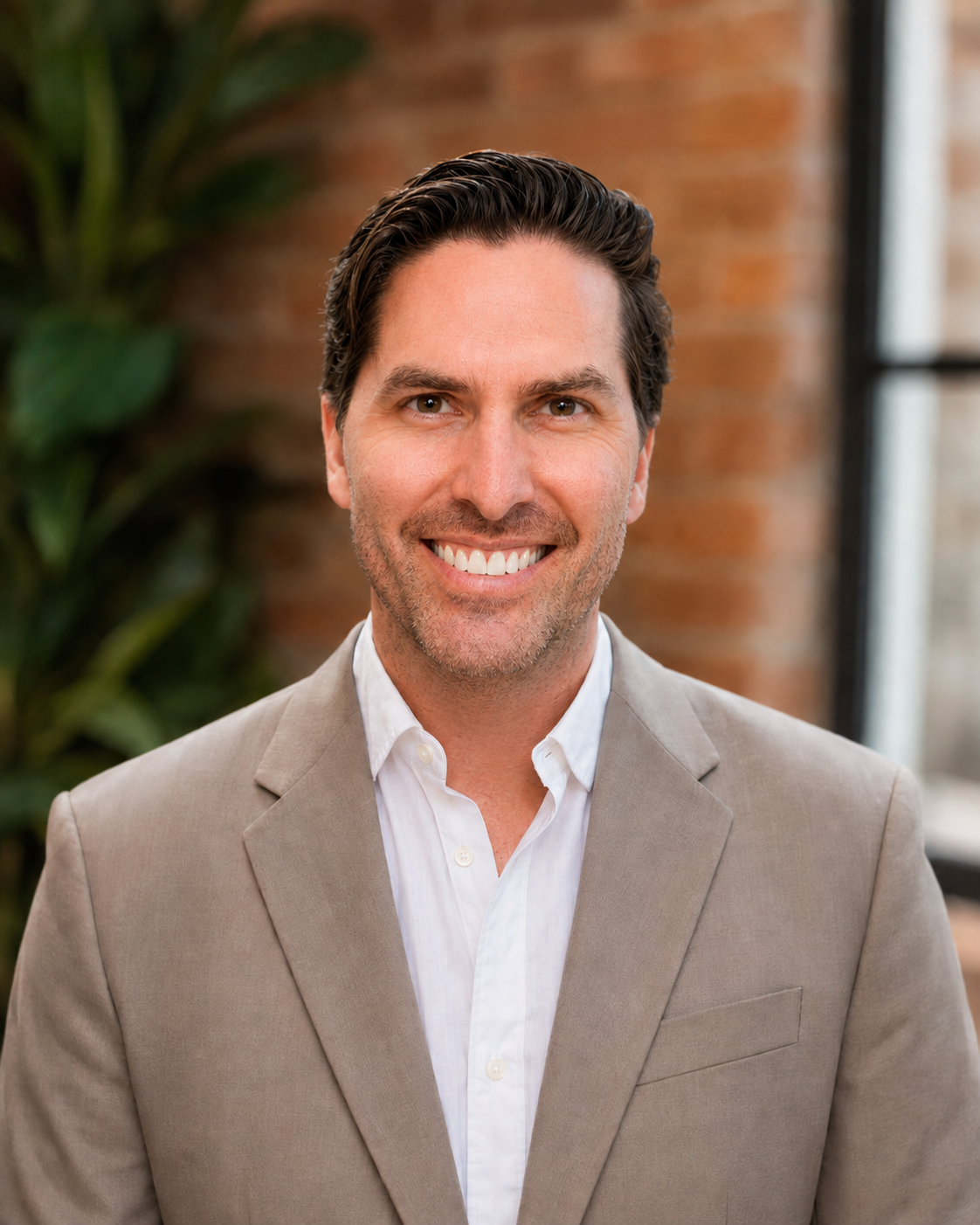
Eighteen years in education, the last ten in Denver building real-world learning, change initiatives, community partnerships, and postsecondary pathways. Ryan brings that experience straight to your team. M.S. in Teaching and Learning, Colorado Professional Principal License.
System builder
Ryan built a school-wide work-based learning system from the ground up—not just a collection of internships.
Student-centered designer
Throughline's approach gives students ownership of exploring interests, finding opportunities, and building relationships with mentors.
Educator first
With experience as a teacher, school leader, coach, and program designer, Ryan understands both the vision and the operational reality of making this work inside a school.
Leads the field beyond his own program.
Since 2024, Ryan has facilitated the Real-World Learning Community of Practice, convening practitioners across Colorado and New Mexico to sharpen how work-based learning systems get built.
-
“Ryan was crucial for creating a learning community where we were able to collaborate on resources, share communication strategies and grow best practices within the real world learning and internship community. Ryan was able to support me with understanding what structures and supports were helpful in effective and successful internship programs.”
Wendy Rose, Futures and College and Career Counselor
Compass Community Collaborative School - Fort Collins, CO
-
“Ryan is an intentional collaborator and leader with the experience and heart to make real change happen. From working group collabs with alternative educators to school-based exhibition panels, Ryan leads with purpose, clarity and student-centered optimism. It’s always a gift to have Ryan in the room.”
Jennie Preece, Work-Based Learning Architect
Venture Academy of Leadership and Entrepreneurship - Parker, CO
-
“Ryan shows up with unwavering enthusiasm in his work. He is able to quickly identify opportunity and fosters an environment of encouragement and possibility with youth and colleagues. He has a gift for gathering folks and working together toward a common purpose. It has been inspirational to see his passion for building sustainable real-world learning programs in action.”
Erin Fernandez, Director of Post-Secondary Success
Colorado LiftED Foundation - Denver, CO